90s Video Games & The Console Wars
Pixels, Polygons, and Pure Magic
The 1990s represented a fundamental shift in home entertainment. The decade began with side-scrolling 16-bit sprites and ended with fully explorable 3D worlds. This was the era of the "Console Wars," a period defined by aggressive marketing, fierce playground debates, and technological leaps that happened at breakneck speed. It was a time when blowing into cartridges was considered a legitimate technical fix.
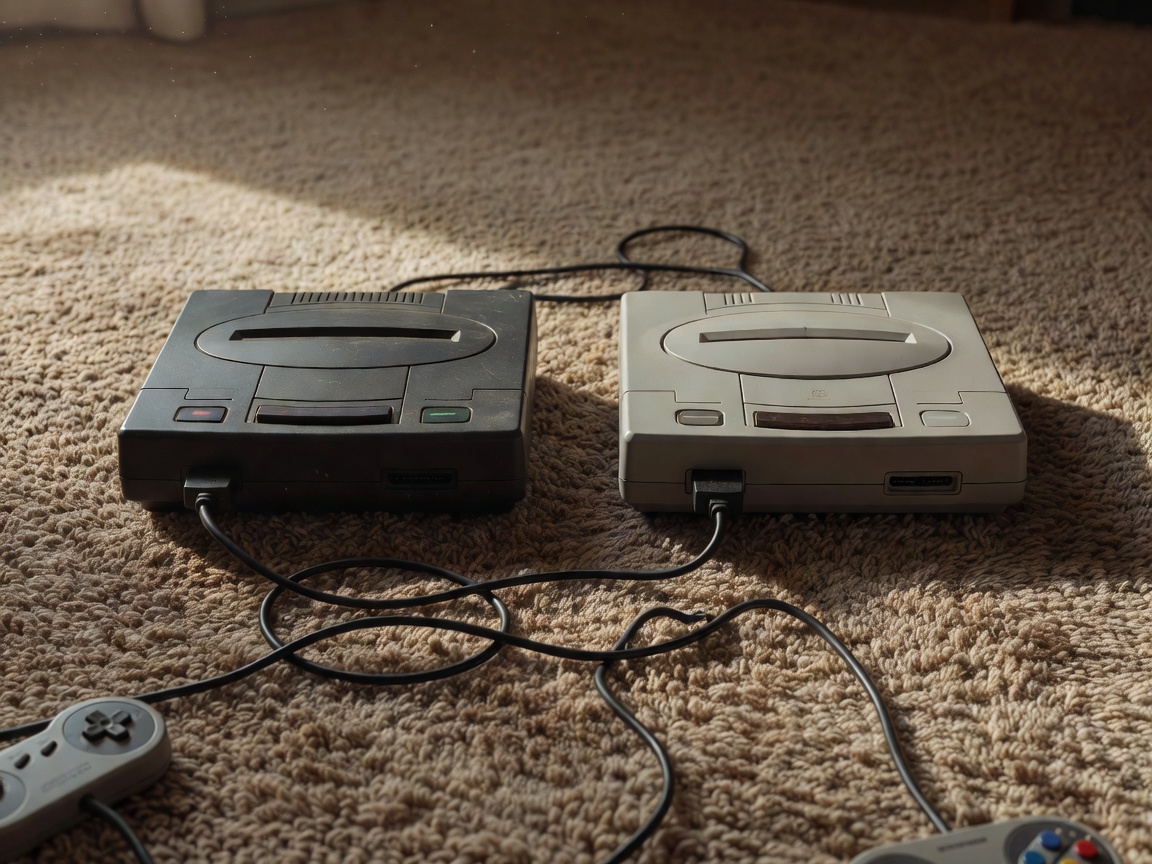
The 16-Bit Battleground: Sega vs. Nintendo
In the early 90s, the battle lines were drawn between the Super Nintendo Entertainment System (SNES) and the Sega Genesis (Mega Drive outside North America). Sega positioned itself as the edgy, faster alternative, coining the famous marketing slogan, "Sega does what Nintendon't." Their mascot, Sonic the Hedgehog, was designed specifically to showcase the console's "blast processing" speed.
Nintendo, meanwhile, relied on a massive stable of first-party intellectual property and an arguably superior sound chip created by Sony's Ken Kutaragi. The SNES delivered deeply atmospheric games with lush color palettes.
| Feature | Super Nintendo (SNES) | Sega Genesis |
|---|---|---|
| Release Year (NA) | 1991 | 1989 |
| Color Palette | 32,768 (256 on screen) | 512 (64 on screen) |
| Audio Chip | 8-channel Sony SPC700 | Yamaha YM2612 FM Synth |
| Controller | 6 buttons + D-Pad, ergonomic | Originally 3 buttons, later 6 |
The Transition to 3D
By 1995, the industry was preparing for the next massive leap: 3D graphics. This era brought three major players to the forefront: the Sega Saturn, the Sony PlayStation, and eventually, the Nintendo 64. The introduction of the CD-ROM as a primary storage medium changed the landscape entirely.
The original PlayStation capitalized on CD technology, which allowed for massive storage capacities compared to cartridges. This meant developers could include full-motion video (FMV) cutscenes, massive pre-rendered backgrounds, and CD-quality orchestral soundtracks. The loading screens were a new annoyance, but the trade-off in game scope was undeniable.
Nintendo stubbornly stuck to the cartridge format for the N64, citing faster load times and durability. While this alienated many third-party developers (most notably Squaresoft, who moved their flagship RPG franchise to Sony), it resulted in some of the most tightly coded, revolutionary 3D platformers and shooters of all time. The four built-in controller ports on the N64 single-handedly established the gold standard for local, split-screen multiplayer.
Handheld Supremacy
While the console wars raged in the living room, Nintendo maintained an absolute monopoly in the handheld market. The original Game Boy, despite its monochromatic green screen and lack of a backlight, crushed technically superior competitors like the Atari Lynx and Sega Game Gear. The secret was simple: battery life and Tetris. By running on four AA batteries that could last up to 30 hours, the Game Boy was genuinely portable. The late 90s release of Pokémon Red and Blue cemented the platform's legacy forever.
The Legacy
Today, we look back at the 90s as the crucible that forged modern gaming. The analog stick, rumble feedback, memory cards, and shoulder buttons were all standardized during this ten-year span. While today's photorealistic graphics are technically impressive, they owe their existence to the blocky, low-resolution polygons that bravely charted the third dimension over two decades ago.